
Visual Inspiration and Its Limits: Using Mood Boards to Find Your Style
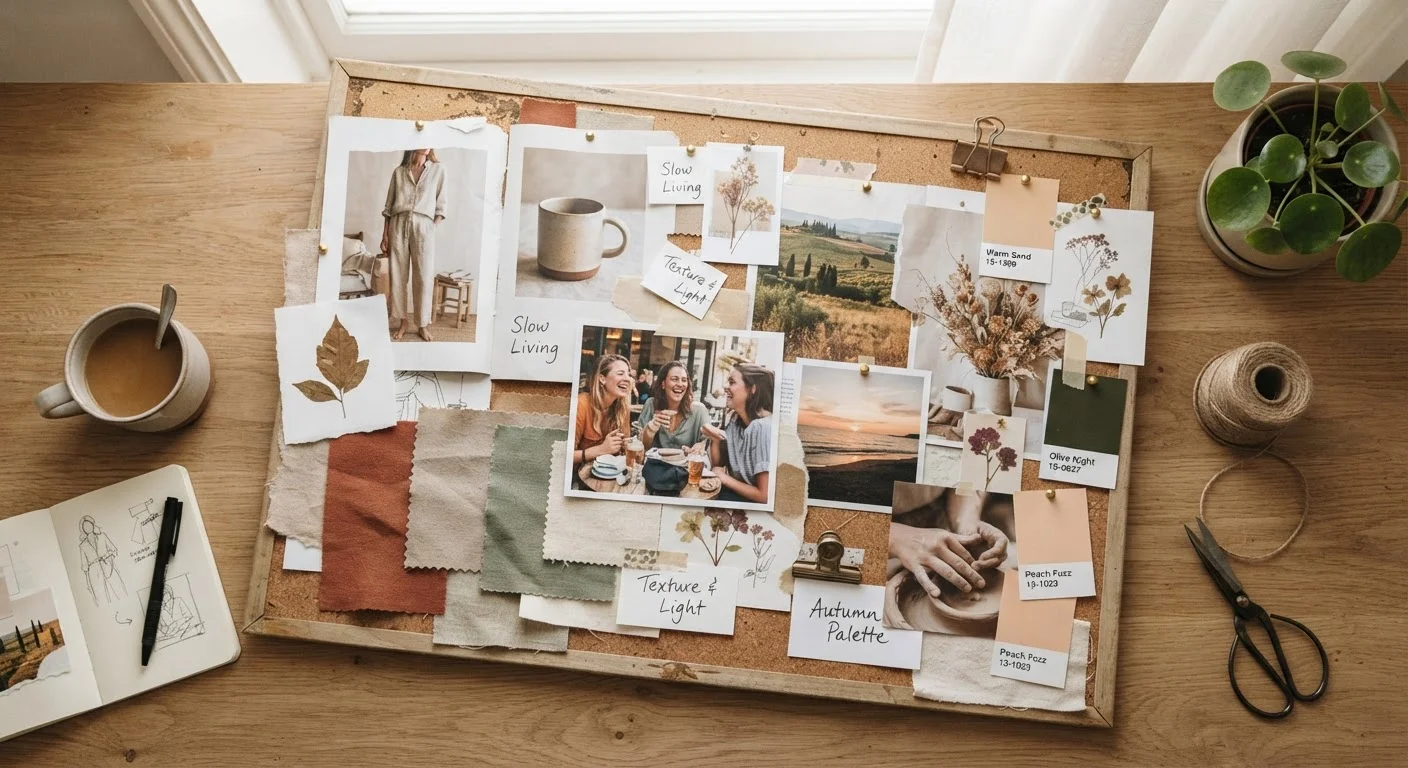
Photo credit: TopInfoTabs.com | Easy Insights For Inspiration
In this article
Mood boards are a useful starting point for style exploration — but only if you know how to translate visual inspiration into wearable decisions.
Key Takeaways
- Mood boards reveal patterns in your aesthetic instincts that browsing alone cannot surface.
- The most useful boards mix textures, colors, and moods - not just outfits to copy.
- Visual inspiration only translates to real style when filtered through your lifestyle and body.
- Recurring themes across multiple boards are stronger signals than any single image.
- A mood board is a diagnostic tool, not a prescription for what to buy.
Why Mood Boards Work - and Where They Fall Short
Mood boards have earned their place in the style toolkit for good reason: collecting images that attract you, without the pressure of a purchase or a specific occasion, gives your visual instincts room to speak. Over time, patterns emerge that are harder to see when you're scrolling quickly or shopping with a specific item in mind. If you're building a style identity from scratch, a mood board can be one of the most low-stakes, clarifying exercises available.
But mood boards also have a well-documented failure mode: they become collections of aspirational images that have nothing to do with how you actually live. A board full of linen trousers and architectural coats is beautiful - and completely useless if you haven't asked why those images attract you and whether any version of that feeling can exist in your real day-to-day wardrobe.
The fix isn't to stop making mood boards. It's to treat them as a diagnostic tool rather than a wish list. Used well, a mood board surfaces the underlying qualities - texture preferences, color instincts, silhouette leanings - that you can then translate into wearable, liveable choices. If you're curious how mood boards sit alongside other style-development methods, lesser-known approaches to developing personal style are worth exploring too.
Inspiration Is Not a To-Do List
A mood board showing a tailored trench coat and silk blouses doesn't mean you need to own those exact items. It means you're drawn to certain qualities - structure, refinement, a particular texture. The goal is to decode what attracts you, not to replicate a look wholesale. Chasing images without this translation step is how wardrobes fill up with things that never get worn.
How to Build and Use a Mood Board That Actually Informs Your Style
The steps below walk you through a structured process - from open-ended image collection to translating what you find into real wardrobe principles. The process works whether you prefer a digital board or a physical one made from clippings.
What you will need
Digital board tool (e.g., Pinterest or a folder of saved images)
Collects and organizes visual references in one scrollable place for easy pattern-spotting.
Physical magazines or printed images
Provides non-algorithmic visual input that can surface instincts the feed might obscure.
Notebook or journaling app
Records your written observations and theme notes as you analyze your board.
Color swatch reference
Helps you name and group the color palette emerging across your collected images.
Algorithm Curation Can Skew Your Board
When you build a mood board exclusively from social media feeds, you risk collecting images that reflect what's trending rather than what genuinely resonates with you. Platforms amplify high-engagement content, which can quietly nudge your board toward popular aesthetics that don't actually fit your life. Deliberately seek images from varied, non-algorithmic sources - print, film, art, architecture - to get a truer read on your instincts.
Collect Without Editing - Yet
For your first collection pass, save images that create any kind of emotional reaction - even mild curiosity. Don't filter for practicality or what you think you should like. Include interiors, landscapes, film stills, textures, and colors alongside outfit images. The broader the net, the more honest the pattern that emerges. Aim for at least 30 images before you start analyzing.
Look for Recurring Visual Themes
Lay out everything you've collected and look for patterns without immediately naming them. Notice recurring colors, textures, silhouettes, light quality, and mood. Do the images tend toward clean and spare, or layered and rich? Warm or cool tones? Structured or relaxed shapes? Write down five to eight recurring observations - not style labels, just descriptions of what you see.
Identify the Feeling, Not Just the Look
For each theme you've identified, ask: what feeling does this create? Not 'I like that blazer' but 'this image makes me feel put-together and unhurried.' Feelings are more actionable than aesthetics because they guide decisions across different contexts - a busy morning, a weekend errand, a dinner out. Jot down three to five feeling-words your board consistently evokes.
Filter Through Your Real Life
Now apply a practical lens. For each visual theme you've found, ask: does my actual daily routine support this? Someone who works outdoors, commutes by bike, or spends weekends with young children has a very different canvas than the images on a typical inspiration board. This isn't about lowering your ambitions - it's about finding the version of your aesthetic that can actually live in your wardrobe. Remove or flag images that represent a life you don't have rather than the one you do.
Translate Themes Into Wardrobe Principles
Convert your refined themes into a short set of personal style principles - ideally three to five statements that describe how you want to dress, not what you want to own. Examples: 'I gravitate toward natural fibers and earthy tones,' or 'I prefer silhouettes with one defined point of structure.' These principles become your filter for future decisions. For deeper guidance on this translation process, intentional dressing principles can help you build from here.
Test the Principles Against What You Already Own
Pull out the pieces in your current wardrobe that you reach for most reliably and hold them against your new principles. Do they align? If your board is full of clean, minimal shapes but your most-worn items are patterned and layered, that's useful data - it may mean the board reflects an aspiration, or it may reveal that your wardrobe simply hasn't caught up yet. Either way, you now have a clearer map. A style audit alongside this step can sharpen the picture considerably.
Notice What You Never Save
Pay attention to the images you scroll past without saving - they're just as informative as the ones you collect. If you never save anything oversized, heavily patterned, or very formal, that tells you something real. Gaps in a mood board are part of the data too.
Once you've worked through these steps, you'll have a clearer vocabulary for your own aesthetic - one grounded in how you feel and how you live, not just what looked good on a screen. From here, exploring recognised style archetypes can help you place your instincts within broader frameworks, and understanding your personal color palette is a natural next step once your overall direction feels clearer. For practical, day-to-day application, the Everyday Fashion hub is a useful ongoing resource.

Author
Style & Beauty Editorial Team
Style & Beauty Editorial Team is the collective byline for our editorial team and contributor network. Articles published under this byline or an editorial pen name are researched, written, and reviewed according to our editorial standards for clarity, consistency, and independence before publication.
View all articles →